
 Remembering Sept. 11, 2001
|
|
 |
Or call us at 1-800-835-2418 |
|
|
|
|

|
Archive for the ‘Food/Canning/Preserving’ Category
Saturday, June 5th, 2010
I appreciated the article in the current issue of BWH about tub gardening.
I purchased three 18-gallon tubs, added potting soil, and am very pleased with the results: tomatoes, bush beans, assorted peppers, lettuce & sorrel. Excellent recommendation for those of us with small urban garden space. Plus the barrels are inaccessible to digging by our puppies.
Thanks again!
Julia Morgan
Pasadena, CA
Posted in Articles, Firearms/Self Defense, Food/Canning/Preserving, Self-reliance | No Comments »
Sunday, May 2nd, 2010
Greetings!
I used to get your magazine and loved it! However, I can no longer afford to subscribe.
I read your article about tapping maple trees and I have to let you know that I have a Norway Maple in my back yard, I am sure the person that planted it just wanted it for an ornamental tree as it is beautiful.
Well, this year I decided to tap it and try to make maple syrup. After I gathered some sap I read from a different source that Norway trees shouldn’t be tapped because of their “milky” sap. I boiled it down anyways and that is the best maple syrup I have ever tasted! I am glad that you mention the Norway maple as a tapper because it really is good.
Your friend,
Dee Dee G.
Posted in Articles, Food/Canning/Preserving, Self-reliance | No Comments »
Wednesday, February 17th, 2010
Claire,
Just a note to tell you how much I like your writings. They are GREAT!
I’ve been baking bread for a while now so you really struck a chord with your article about this, but I really like your perspective and look foward to all of your aticles and now that I found your blog I’ll checking it out regularly.
Hope all is well in the high desert today . We normally have mild winters here in central Texas but it is overcast and wintery today.
Best wishes,
Charles Allen
Posted in Articles, Claire Wolfe, Country Living, Food/Canning/Preserving | No Comments »
Monday, January 25th, 2010
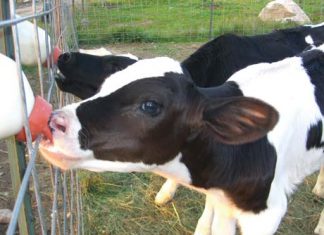
I read and enjoyed your article on the family cow. I have one and love her and all the wonderful dairy that comes with her. However, I strongly disagree with your recommendation to pasteurize this milk.
Raw milk contains living enzymes and probiotics that are killed when pasteurized. Also, much of the vitamin content is lost when pasteurized. Pasteurization is not needed when milk is handled correctly and it ruins one of the very best parts of having a cow – slurping down that milkshake on the front porch, knowing that it is the healthiest thing you consumed all day!
Pasteurization was originally introduced because disease was being spread through raw milk because of the filthy dairy conditions. It was cheaper/easier to fry the milk, than to clean up their act.
I hope you will at least include this argument in your article so that folks can decide for themselves with all the facts on the table.
The dairy industry conned the public into thinking that milk needed pasteurization because it was inherently unclean so that no one would ask the obvious question, “why don’t you people just clean up your act instead of destroying one of God’s most incredibly healthy foods?”
Thanks,
Sandy
Posted in Animals, Articles, Food/Canning/Preserving, Health | No Comments »
Wednesday, January 6th, 2010
I really love Jackie’s new book. As a matter of fact, I’m soaking beans right now to can as ham & bean soup. I am also going to can beans because most of mine are pretty old. Then I can get new ones as soon as we use up the ones we have.
Thank her for me, would you please?
Georgia
Posted in Books, Food/Canning/Preserving, Jackie Clay | No Comments »
Tuesday, November 24th, 2009
Dear Editor,
In the article, With commonsense planning, you can survive hard times, under SALT you state that iodized salt is used for canning pickles and meat preservation. NON-IODIZED salt is used. This needs to be corrected immediately before you kill somebody.
Sincerely,
Dinah M.
Certified Home Canner
Dinah,
This is a typo and should read “non-iodized salt”. However, using iodized salt will not kill anyone.
The reason you don’t use iodized salt in pickling is that when combined with certain natural occurring minerals in some water, it can darken your pickles.
Most table salt used in the US is iodized and it has been strongly recommended that consumers USE iodized salt as it combats iodine deficiency possible in some areas of the country.
Used in such minute amounts, it certainly won’t poison anyone. I use iodized salt in most of my canning and have for decades.
Jackie (and still alive!)
Posted in Articles, Food/Canning/Preserving, Jackie Clay, Preparedness, Self-reliance | No Comments »
Tuesday, November 10th, 2009
Greetings..
I’m an organic farmer/homesteader in southern Louisiana and have been a fan of your magazine for a number of years. I have to admit though that I haven’t picked up a copy in quite sometime. This article reminded me of why I should.
I have been searching the web and books for an identification of what I believe to be chanterelle mushrooms that are growing in droves in the woods surrounding my farm. No image that I could find was an exact of this particular mushroom, until coming across this article by Devon Winter.
It turns out that the mushroom I have is the Cantharellus Lateritius, which has a less pronounced ridge than the other species I have come across.
Thanks for settling this issue for me. My farm could sure use the extra income in this particularly harsh season we have been having(too much rain).
Thanks to Devon Winter if you happen to speak with him.
I look forward to the next issue of Backwoods Home I pick up.
Joel A. LeLeu
Posted in Articles, Farm/Garden, Food/Canning/Preserving, Self-reliance | No Comments »
Saturday, November 7th, 2009
The new gardening and canning book by Jackie Clay is absolutely top-notch!
It’s practical, understandable even by newbies, and very comprehensive.
Thanks SO MUCH!!!
J Millhorn
Plano, Texas
Posted in Books, Farm/Garden, Food/Canning/Preserving, Jackie Clay, Preparedness, Self-reliance | No Comments »
Monday, September 28th, 2009
I am also a user and collector of cast iron cookware and thought I would pass along an old western tip for deep frying.
Heat the oil in a dutch oven on medium-high heat and drop a kitchen match in the oil. When the match flares up, the oil is the right temperature for deep-frying (about 375 degrees). Raise the temp just a notch, because you’re adding lower temp food, and go.
Keep up the good work
Terry Bolling
Phoenix, AZ
Posted in Articles, Food/Canning/Preserving, Jackie Clay | No Comments »
Friday, September 25th, 2009
Dave,
I think your magazine is very nearly perfect.
We will store our print copies forever! An online version would make poor toilet paper in a disaster situation! So, don’t waste your time and effort on an online version!
And this comment is from a “buy nearly everything off of the Internet” high tech geek guy with a degree in electronics!
Oh, as an aside, some of us are vegetarians and are NOT left wing whacko’s! So an occasional vegetarian recipe is always welcome at our house .
Thanks for such a great magazine! This will be the last subscription to go as we go softly (or not) into the Greatest Depression….
Another Libertarian abandoned by the R[epublican] party!
Joe Olson
Posted in Food/Canning/Preserving, Magazine, Preparedness, Self-reliance, Subscriptions | 1 Comment »
Thursday, September 24th, 2009
Just a suggestion – eggs can be frozen in their shells. You just place them in a ziploc bag and freeze.
When you are ready to use, take out what you want and let thaw for about an hour on the counter in a bowl. You can run the egg under warm water, crack it and slip the shell off easily. Place in refrigerator covered with plastic wrap to thaw.
These are best for baking. The yolk will be a little tough but when beaten will return to normal.
Sheila Darden
Posted in Food/Canning/Preserving, Preparedness, Self-reliance | No Comments »
Saturday, August 22nd, 2009
Thank you for making the “How to Butcher a Chicken in 20 minutes or Less” article available to the general public.
I am raising layer chickens for the first time and I have 4 roosters that need to come to the dinner table.
Skinning is a much better option for me than plucking.
Thank you!
Rev. Jeff Zell, Pastor
Gloria Dei Lutheran Church
South Bend, IN
Posted in Animals, Articles, Food/Canning/Preserving, Self-reliance | No Comments »
Friday, August 7th, 2009
Dear Backwoods Home Editor,
This is the first time that I read your magazine, and I loved it!
I grew up in rural Pennsylvania and we used cast iron pans to cook every meal. When I was married 13 years ago, my Dad gave me the complete pan set as a wedding gift. I have 6 pans from the original set that were my Great Grandmother’s and I have added a 12 inch dutch oven with legs and a lid (for camping) and a 12 inch deep sided skillet that I found dirt cheep at a yard sale (it was rusty and the lady did not know how to cure it). The lid from the dutch oven fits my 12 inch skillet and the deep sided skillet, it can also be turned upside down and used as a small griddle when camping. I will not cook with anything else!
Thank you for the great articles and your publication. I will be subscribing soon!
April Letourneau
Wasilla, Alaska
Posted in Articles, Food/Canning/Preserving, Jackie Clay, Self-reliance | No Comments »
Wednesday, August 5th, 2009
In response to a letter of a Reader looking for Canned Bacon. I Found this item while doing a related search (on MRE’s).
Try here (http://www.mrestore.com/products-all.php?page=2&cid=2) for a distributor that has Bacon.
Love the Magazine keep it up.
Yours,
Scott Paul
St. Charles, Missouri
Posted in Food/Canning/Preserving | No Comments »
Saturday, July 18th, 2009
I enjoyed Jackie’s article on cast iron. We have collected a number of pots/pans/ovens over the years.
The section of the article addressing whether or not to “wash” one’s cast iron struck me. My dad was from upstate New York in a very rural setting. He had some beautiful cast iron skillets (which we now have!) that were perfectly seasoned and he used nearly every day. I learned from him to use very hot water and SALT to “wash” the cast iron.
The article mentioned the pioneers using a handful of sand. I think the salt likely provides the same result. Just toss a little in the very hot water, shove it around with a rag or sponge or whatever is handy, rinse, dry, then we use a paper towel to rub just a VERY small amount of oil on the inside of the utensil, and dry it out in a 200 degree oven. Once it cools, it’s ready for the next use.
Thank everyone at BHM for all of the hard work, the information, and the willingness to share it all with us.
Best regards,
Mary Nell Condren
DeRidder, LA
Posted in Articles, Food/Canning/Preserving, Jackie Clay, Self-reliance | No Comments »
Wednesday, July 15th, 2009
Thanks! Despite loving to cook on well-seasoned cast iron, I’ve never been able to properly season it. After reading your article, I figured I’d give it one more try.
I found a cast-iron griddle at a garage sale last weekend. Although it looked seasoned, it was little used, much like my own, since I was never able to do it correctly.
To make a long story short, I hand sanded that thing for two hours on my deck yesterday. After I got it down to 220 grit sandpaper, I decided I didn’t like it well enough yet, so I started over again at 60 grit. It was as close to glass as I could get it before even attempting to oil it.
After sanding, and cleaning it with paper towels and a LOT of oil (no water) until all the loose iron was gone, I oiled it, tossed it in the oven, and waited …. perfect eggs this morning, and it didn’t stick at all! I now have a couple more things in my basement that need sandpaper….. dutch oven and bigger griddle being the two biggest things.
Paula Werme
Boscawen, NH
Posted in Articles, Food/Canning/Preserving, Jackie Clay, Self-reliance | No Comments »
Thursday, July 9th, 2009
Thanks for the “Whole Wheat for the Whole Week” article. [Issue #117 - May/June, 2009] I changed the recipe to add Whole Grains to it. I found a recipe that tells you how to prepare the grains. I was just putting them in dry before, good but hard on the teeth.
This is what I used.
2 Tablespoons Wheat Berries
2 Tablespoons Oat Groats
2 Tablespoons Spelt Kernels
2 Tablespoons Millet Seed
2 Tablespoons Barley.
(Cracked Wheat, Oats & Spelt).
Cook grains together in 2 parts Water to 1 part Grain (I used 1 1/2 Cups Water): Cook until water is absorbed. Cool to room temperature. I added this just before mixing in the flour.
I had to divide the recipe into 4 parts instead of 3 parts because we like smaller loaves of bread.
Another GREAT BIG thanks for all of Jackie Clay’s articles. Her Canning Article gave me enough confidence to can our meats. I canned as a kid with my Mom but all she really canned was Green Beans.
Angi Weyhrich
Springdale, WA
Posted in Articles, Food/Canning/Preserving, Jay Stoler | No Comments »
Tuesday, July 7th, 2009
Oh my. After a couple days away from your website I logged on and scanned quickly for something to open and of course — my all time favorite subject — CAST IRON COOKWARE!!!!!
I loved the article immensely – almost as much as I love my cast iron cookware. I have 2 dutch ovens, a griddle, many, many skillets (probably at least 6) and just bought two pots with wooden handles at a flea market. I’m always on the prowl for more cast iron. That is my weakness. I LOVE Lehman’s and every time I go, I almost always get a new skillet or some other valuable piece that I just have to have. I typically make soups and stuff over the campfire in my dutch ovens, I have never baked – I’ve been afraid to try. This is the same reason I haven’t bought the cornbread trays.
I’m at work and at lunch so I printed the article to finish reading at home. Thank you, Jackie, for a very informative article (and an exciting one for me). I will try to bake something now, you’ve given me some confidence to try.
Linda Fenk
West Wheatfield, PA
We’re happy you enjoyed the article, Linda and hope you’ll consider subscribing to the print issue. Only a few articles from each issue go online so why take the chance of missing one you’d really enjoy. — Dave
Posted in Articles, Food/Canning/Preserving, Jackie Clay, Self-reliance | No Comments »
Sunday, July 5th, 2009
Hello.
My husband and I are brand new to both BHM and the idea of self-reliant living. We are moving onto our own acreage to start a small farm in the next week.
I wanted to let you know how enlightening I found the article by Linda Gabris “Homemade Pre-Mixed Foods, They’re Economical and Easy To Make”. [Issue #117] I can’t believe it had never crossed my mind to make these things at home! The recipes look easy and included enough detail and variation that I am sure they will become staples in my pantry.
I am hoping to see many more recipes like these for us “New Kids” who can use all the suggestions they can get! Maybe a cookbook all about this topic?
Thanks so much for being a source of knowledge and support, and we will be counting the days until our next issue!
Kara Fraley
Cornersville, TN
Posted in Articles, Food/Canning/Preserving, Linda Gabris | No Comments »
Thursday, June 18th, 2009
I really enjoyed Jackie Clay’s article on cast iron. We’ve been using it for years and love it too. Just by experimenting with cooking and cleaning and restoring it we picked up most of the info Jackie covered already–but it was great to see it all in print! I hope that article is part of her new cookbook and I can’t wait to see that–I’ll definitely order one!
She’s a great inspiration and a fount of knowledge. I’ve had several of my questions answered on her Ask Jackie Blog and am very grateful there’s someone out there who actually knows a few odd things and is willing to share the info.
Mary Thompson
Posted in Articles, Food/Canning/Preserving, Jackie Clay, Self-reliance | No Comments »
|
|
Have questions regarding this Blog? Please email us. Comments may appear online in "Feedback" or in the "Letters" section of Backwoods Home Magazine. We read every email you send us, but due to the sheer volume of mail we receive, we can't respond to each one.

|
|

|
|

(PDF 3.33 MB)
(PDF 213 KB)

| |