
Page Not Found
Sorry! The page you were looking for is no longer available or the link has expired. If you were looking for a specific product, you can search our store.
While you’re here, take a look through some of our great articles!
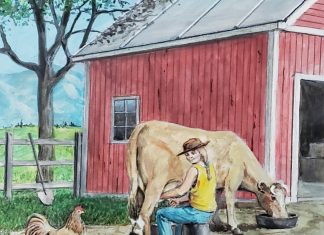
Raising your own beef for your family
By Charles Sanders
Issue #57 • May/June, 1999
For most homesteaders, the raising of livestock plays a crucial role in the home based economy. The types...

The ‘Chocolate Tree’ Isn’t Just for Kids
By Rev. J.D. Hooker
Issue #85 • January/February, 2004
My grandson Tommy was probably 50 feet up off the ground when he hollered, "Catch this one,...

Leaf Mold is Another Way to Build Your Soil
By John Fuchs
Issue #41 • September/October, 1996
Leaves are an excellent way to add organic matter to the garden. However, using rawor unprocessedleaves has some...
Love Those Green Beans
By Alice B. Yeager
Issue #68 • March/April, 2001
Anyone with some gardening space, a sunny location, and good loamy soil with pH 6.0-7.5 can grow...
By O. E. MacDougal
Issue #154 • July/August, 2015
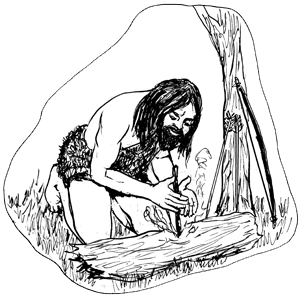
There was a time when it was thought that a defining difference between humans and animals was: we use tools, they don't. But, in the last few decades, it's been discovered that many animals are tool users.
Before we go further, let's define...
By Marjorie Burris
Issue #57 • May/June, 1999
My grandmother, Mary Etta Dillman Graham, was one of those frontier women who took life as it came; extremely practical, resourceful and inventive, she was always, always ready to help other women. True to her time and her own modest nature, she never...

By John Silveira
Issue #29 • September/October, 1994
(This is a four-part series. Click the links to navigate to parts one, two, three, and four.)
It was the best of times, it was the worst of times...wait a minute, it was the worst of times. I was getting ready to head for...