
Page Not Found
Sorry! The page you were looking for is no longer available or the link has expired. If you were looking for a specific product, you can search our store.
While you’re here, take a look through some of our great articles!
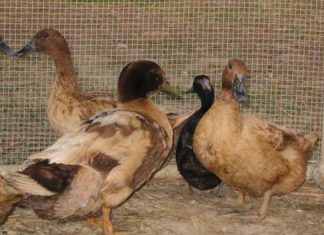
Khaki Campbell ducks — The other egg layer
By Amanda J. Kemp
Issue #126 • November/December, 2010
Spring brings the pitter-patter of little feet in the mud, games of tag, and raucous quacks. While...





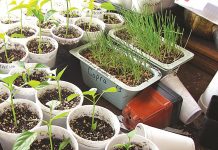
Growing and Using Peppers
By Jackie Clay-Atkinson
Issue #164 • March/April, 2017
I’ve been growing peppers for more than 50 years now and can’t imagine a garden without them. There...
Cheaper than Store-Bought Eggs
By Kristina Seleshanko
Issue #177 • July/August/September, 2019
Something we heard a lot when we first started raising chickens in the suburbs was, “For the cost...

Want More Fruit From Less Space? Espalier Your Trees!
By Rev. J.D. Hooker
Issue #79 • January/February, 2003
After originating in the semi-arid regions of the middle east, espaliering (is-'pal-yer-ing) became a commonly employed fruit...
By O. E. MacDougal
Issue #154 • July/August, 2015
There was a time when it was thought that a defining difference between humans and animals was: we use tools, they don't. But, in the last few decades, it's been discovered that many animals are tool users.
Before we go further, let's define...

By Tom Kovach
Issue #79 • January/February, 2003
A person recently wrote to a large Midwest newspapers' advice column asking for information about outdoor privies. It seems that this person's family inherited a log cabin from out of the 1930s and it came with no indoor plumbing. Instead there was an...

By John Silveira
Issue #34 • July/August, 1995
(This is a four-part series. Click the links to navigate to parts one, two, three, and four.)
Do I have to stay and help you?" my 12-year old son asked.
I stood by the edge of the bathtub staring at the exposed plumbing. I could...